
Table of Contents

Senior living operators are rethinking what they need from technology.
For years, many communities relied on separate systems for life safety, communication, reporting, resident engagement, and operations. Each platform served a specific purpose, but together, they often created fragmented workflows and operational blind spots that made it harder for teams to work efficiently.
Today, those challenges are becoming harder to manage.
Communities are balancing staffing pressure, rising resident acuity, increasing family expectations, and growing demands for operational visibility across every department. At the same time, leadership teams are being asked to improve responsiveness, strengthen resident experiences, and operate more proactively with fewer resources.
That shift is one of the biggest reasons operators are upgrading to integrated senior living software.
The conversation is no longer centered solely around individual products or isolated technology features. It is centered around how technology helps the entire community work together more effectively.
Disconnected Systems Create Operational Friction
Many senior living communities adopted technology gradually over time.
A nurse call system was added first. Communication tools came later. Reporting platforms, engagement systems, and analytics environments were often layered on separately as new operational needs emerged.
The result is that many communities now manage multiple systems that were never designed to work together, and that fragmentation creates friction across the organization.
Staff spend time switching between platforms, searching for information, and managing disconnected workflows. Leadership teams often lack a complete operational picture, making it harder to identify patterns, improve response times, or support proactive decision-making.
Those inefficiencies impact more than operations alone.
They also affect resident experience, communication consistency, staff confidence, and the amount of time caregivers can spend focusing directly on residents.
This is where integrated senior living software is changing expectations across the industry.
Operators Need More Than Emergency Response Alone
Historically, life safety technology focused primarily on reacting after an event occurred: A resident triggered an alert, staff responded, and the interaction ended there. But today’s communities need more visibility than isolated alerts alone can provide.
That expectation is becoming increasingly clear across the industry. In a recent McKnight’s Senior Living survey of more than 100 senior living executives, 90% of respondents said a better life safety solution should improve resident and family satisfaction. That finding reflects a broader shift in how operators are evaluating technology overall. The conversation is no longer limited to alerts or response times alone. Increasingly, communities are looking for integrated senior living software that supports stronger coordination, clearer communication, and a more connected experience across care and operations.
Operators are increasingly looking for integrated senior living software that helps communities:
- Identify operational patterns earlier
- Improve staff coordination
- Strengthen communication workflows
- Increase visibility across departments
- Support faster, more informed decisions
- Create more proactive resident support environments
The goal is no longer simply responding faster.
It is understanding what is happening across the community more clearly and helping teams act with greater confidence before issues escalate.
Integrated Technology Supports Better Human Interaction
One of the biggest misconceptions surrounding technology in senior living is the idea that more systems automatically create better operations.
In reality, too many disconnected systems often create more complexity.
Caregivers already manage enormous responsibilities throughout the day. When staff are forced to navigate fragmented workflows and multiple dashboards, valuable time is pulled away from residents and families.
The best integrated senior living software reduces that operational friction.
When communication, life safety, operational insights, and resident information work together more seamlessly, teams spend less time searching for information and more time supporting people.
That creates benefits across the community:
- Faster communication
- Clearer workflows
- Better coordination
- Stronger operational visibility
- More proactive support
- More time for meaningful resident interaction
Technology becomes most valuable when it quietly supports the people delivering care every day.
Visibility is Becoming a Competitive Advantage
Senior living communities are operating in increasingly complex environments, and leadership teams need stronger visibility than ever before.
Communities want to understand:
- Response trends
- Staffing patterns
- Resident engagement insights
- Operational bottlenecks
- Communication efficiency
- Community-wide performance metrics
Integrated senior living software helps bring those insights together into a more unified operational environment. Instead of relying on disconnected reports and fragmented systems, operators gain clearer visibility into how the community is functioning in real time.
That visibility helps leadership teams make more informed decisions while giving staff stronger support throughout the day. More importantly, it allows communities to operate more proactively instead of constantly reacting to problems after they occur.
The Future of Senior Living Technology is Connected
The senior living industry is moving beyond isolated point solutions.
Operators are increasingly looking for connected environments where life safety, communication, analytics, engagement, and operational workflows function together more intelligently across the entire organization.
That shift is redefining what communities expect from modern technology partners.
The future of integrated senior living software is not simply more features or more systems.
It is creating environments where teams can see more clearly, communicate more effectively, respond more proactively, and support residents more personally throughout daily life.
Because the communities leading the future of senior living are not focused on adding more disconnected technology. They are focused on creating stronger operational alignment across the entire resident experience.
A Smarter Approach to Integrated Senior Living Software
Communities upgrading technology today are investing in more than new systems.
They are investing in clearer communication, stronger visibility, faster coordination, and more connected operational environments that support residents, families, caregivers, and leadership teams alike.
That is where integrated senior living software is heading.
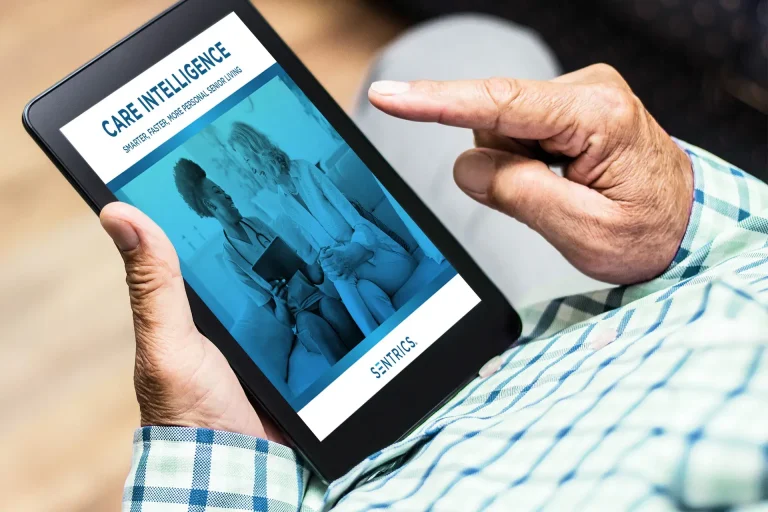
Connect with a Sentrics representative to learn how Care Intelligence helps communities create more connected, proactive, and responsive senior living environments.