
Table of Contents

The senior living industry is entering a new phase of technology adoption.
For years, conversations centered on features. Communities evaluated systems based on capabilities, compared vendor offerings, and invested in solutions designed to address specific operational challenges. As new technologies emerged, the focus often remained on what a platform could do.
Today, operators are asking a different question.
Rather than looking for individual solutions, they are increasingly evaluating how technology helps their communities function as a whole. Communication, visibility, staffing efficiency, resident experience, and operational performance are no longer separate conversations. They are now deeply connected priorities that influence one another every day.
Recent research from McKnight’s Senior Living reinforces this shift. While the survey [ADD LINK ONCE PUBLISHED] explored a variety of technology topics, the findings reveal a common theme: operators are looking for technology that helps people work together more effectively.
That may sound simple, but it represents a meaningful change in how the industry is thinking about technology investments.
The Conversation Expands Beyond Life Safety
Life safety remains one of the most important technology investments a community can make. Reliability, responsiveness, and resident protection will always matter.
Yet one of the most revealing findings from the survey had little to do with alerts themselves.
When asked why they would consider switching life safety providers, 55.7% of operators cited a lack of modern communication features as the primary reason.
That statistic highlights an important reality.
The challenge is not simply knowing when an event occurs. The challenge is making sure information reaches the right people quickly enough to support effective action.
An alert is only the beginning of a workflow. Staff still need to communicate, coordinate responses, share information, and make decisions. When those processes become fragmented or inefficient, operational performance suffers regardless of how effective the original alert may have been.
This is one reason senior living emergency call systems are becoming increasingly important across the industry. Operators are recognizing that communication is no longer a supporting function. It is a critical component of care delivery, operational efficiency, and resident satisfaction.
Visibility Creates Better Decisions
Another finding from the survey offers insight into what operators believe is missing from many technology environments today. When asked which advanced feature they would be most willing to pay for, respondents ranked Advanced Location and RTLS capabilities first at 26.4%.
On the surface, that appears to be a preference for a specific feature. In reality, it reflects something much larger.
Operators are looking for greater visibility into what is happening across their communities because care, risk and response do not stop at the resident room. They want more context around resident movement, staff workflows, response activity, and operational patterns.
The value of visibility extends far beyond location awareness.
When teams have a clearer understanding of what is happening throughout a building, they can identify issues sooner, coordinate more effectively, and make decisions with greater confidence. Information becomes more useful because it is connected to context rather than existing as an isolated data point.
This shift from reactive awareness to operational visibility is helping redefine what communities expect from their technology.
Technology Must Support People, Not Just Processes
Perhaps the clearest message from the survey emerged around staffing.
Respondents identified staffing retention as their top operational priority at 32.7%. By comparison, adopting AI and proactive care initiatives ranked last at 14.2%.
That contrast is telling.
Despite the attention surrounding emerging innovations, operators remain focused on one of the industry’s most persistent challenges: retaining the valuable staff they have and giving them more time to do what they love best–interact with residents.
Technology plays an important role in that effort, but not in the way many vendors describe it.
Communities are not looking for technology that simply adds more information, more alerts, or more complexity. They are looking for technology that removes friction from daily operations. Increasingly, senior living emergency call systems are being evaluated based on their ability to simplify communication, reduce unnecessary manual work, improve coordination, and help teams spend more time focused on residents.
The most valuable technology investments simplify work. Solutions like Ensure® extend beyond alert management by enabling fast, efficient communication between staff and residents. Two-way voice communication (staff-to-staff and staff-to-resident), push-to-talk messaging, alert routing, escalation workflows, and integrated intercom functionality all improve performance.
When information is easier to access, when communication flows more naturally, and when teams can act without navigating multiple disconnected systems, operational performance improves almost as a byproduct.
What These Findings Really Mean
At first glance, communication, location intelligence, and staffing may seem like separate priorities.
Viewed together, they tell a different story.
Operators are looking for stronger connections between people, information, and action.
They want communication that moves more efficiently. They want visibility that extends beyond isolated events. They want technology that helps teams work more effectively without creating additional complexity.
These priorities point toward a broader shift in how senior living technology is being evaluated.
The future will not be defined by individual systems operating independently. It will be shaped by how effectively communities can connect information across care, operations, resident engagement, and decision-making.
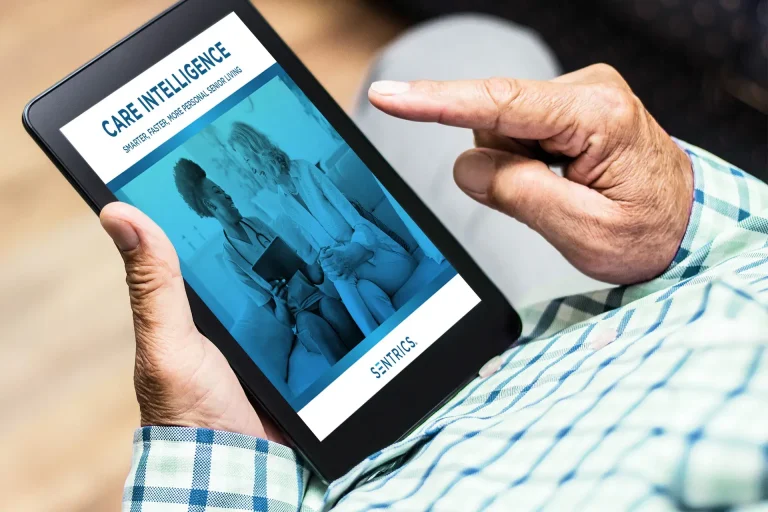
This is the foundation of Care Intelligence [LINK TO CARE INTELLIGENCE EBOOK].
By bringing together life safety, resident connection and experience, operational insight, and AI assistance, Care Intelligence creates a more complete view of the community. Instead of working from fragmented information, teams gain shared visibility that helps them communicate more effectively, coordinate more efficiently, and make better-informed decisions.
The result is not simply better technology. It is a more connected operating environment that helps communities deliver better outcomes.
Modernization Without Sacrificing Reliability
One final finding from the research deserves attention.
According to the survey, 90% of operators believe the right life safety solution can improve resident and family satisfaction.
That statistic reinforces an important point. Technology is no longer evaluated solely on technical performance. It is increasingly evaluated on the experiences and outcomes it helps create.
At the same time, the average age of life safety systems currently used is 7.4 years, and nearly one in five communities has relied on the same outdated technology for 16 years or more.
Taken together, these numbers reveal an industry that wants modernization without sacrificing dependability.
Operators are looking for stronger communication, better visibility, and more intelligent workflows. They want systems that help communities operate more effectively while maintaining the reliability that residents, families, and staff depend on every day.
The opportunity is not choosing between innovation and trust. It is building technology that delivers both.
Key Takeaways
- Modern communication has become a critical operational priority for senior living communities
- Operators are placing increasing value on visibility across the entire community
- Staffing challenges continue to shape technology investment decisions
- Communities want technology that reduces friction and supports teams more effectively
- The future of senior living technology will enable not replace human connection
- Care Intelligence helps unify communication, visibility, operational insight, and AI into a more connected approach
Build a More Connected Future
The findings from McKnight’s Senior Living make one thing clear: operators are looking for more than the latest technology trends. They are looking for senior living emergency call systems that help communities communicate more effectively, operate more efficiently, and make better decisions.
Sentrics is helping communities move toward that future through Care Intelligence, connecting life safety, resident engagement, operational insight, and AI into a more complete view of the community.
Connect with Sentrics to learn how Care Intelligence can help your community improve communication, strengthen visibility, and support stronger operational outcomes.